


Europe’s Top 11 Beaches 2026

Updated: Jul 26
Need a beach to cool off during the European summer heat? Why not go for the best?
Eleven European beaches made it into The World’s 50 Best Beaches ranking for 2026, and Greece is the clear winner. Three of the eleven entries are Greek, and Greece also has the continent’s best global ranking. Spain, Portugal, Italy, France and Ireland fill out the rest of the field.
1. Fteri Beach, Greece

The winner. Fteri Beach on Kefalonia ranked No. 2 in the entire world. It claimed the No. 1 spot in Europe. No road leads here. The only way in is by boat or a brutal hike down the cliffside. That’s not a flaw. It’s the entire business model. Untouched white sand. Glass-clear water. A setting that makes Kefalonia’s north coast look almost unreal.
Kefalonia is the largest of the Ionian Islands. It’s green and mountainous, known for vineyards and a slow island pace. That’s nothing like the Aegean’s party-island reputation. Fteri sits beneath limestone cliffs on the island’s wilder north coast, far from the resort strips around Argostoli. Greece didn’t just win Europe’s top spot. It dominated the entire top ten, with three Greek beaches making the cut.
2. Cala Macarella, Menorca, Spain

Spain’s best shot. It landed at No. 12 worldwide. The cove is horseshoe-shaped, which keeps the water calm almost year-round. That’s exactly why every influencer with a Balearic itinerary stops here. Pretty. Predictable. Postcard-perfect.
Menorca is the quieter Balearic sibling to Mallorca and Ibiza. It’s a UNESCO biosphere reserve, and development laws have kept most of the coastline free of high-rises. Cala Macarella sits on the wild south coast near Ciutadella. Pine forest grows right down to the sand. Its smaller twin cove, Macarelleta, is tucked just around the headland for those who want even less company.
3. Cala dei Gabbiani, Sardinia, Italy
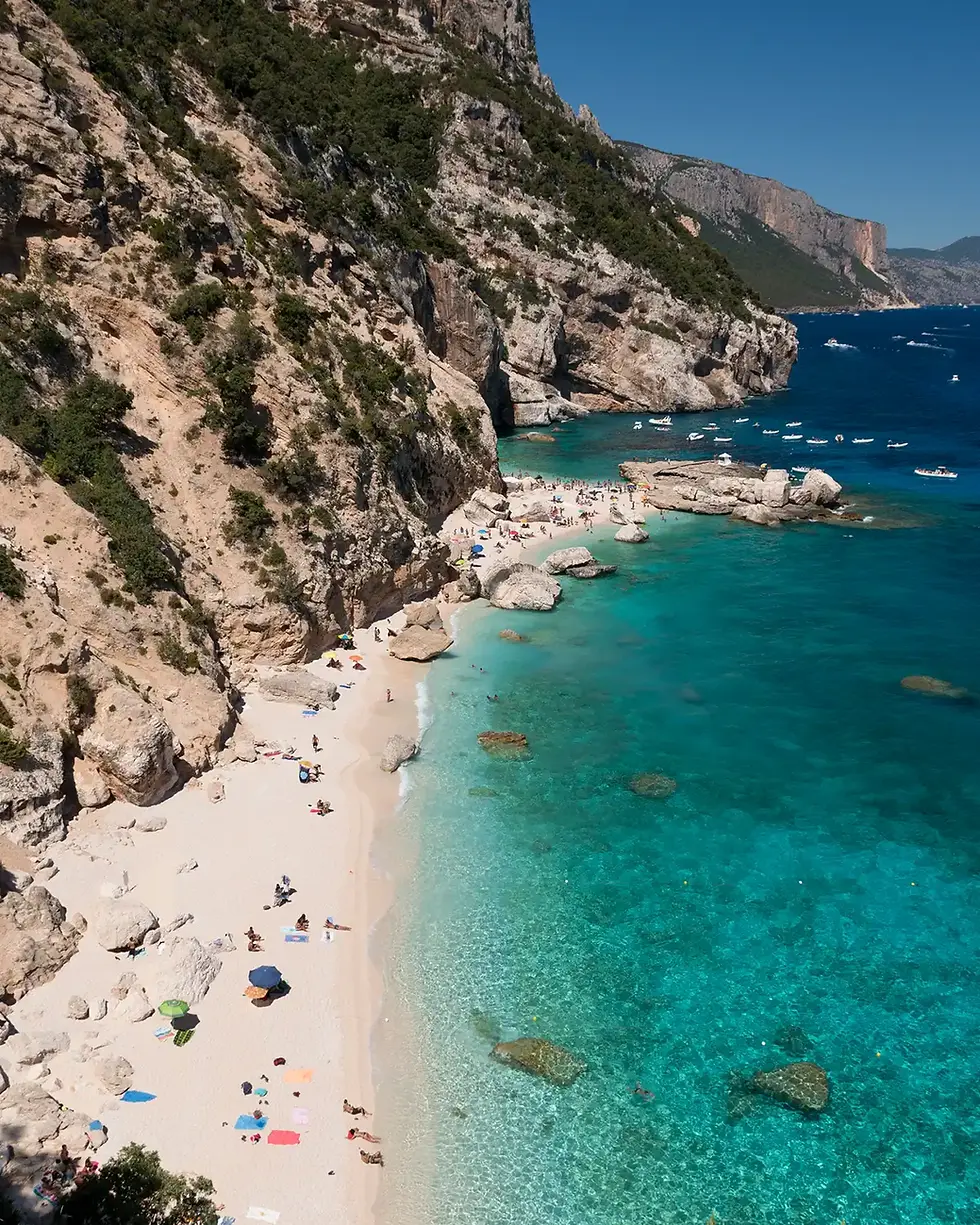
Italy’s top entry. It came in at 18th place globally. Granite rock formations. Shallow turquoise water. The name literally means “cove of the seagulls.” The birds picked it first. Tourists followed.
The beach sits on the Costa Smeralda, Sardinia’s glamorous northeastern coast, built around Porto Cervo’s yacht harbours and celebrity villas. Cala dei Gabbiani is a quieter corner of that coastline, near the village of Porto Rotondo. Wind and salt spray have worn the granite boulders smooth, giving the bay a sculpted, almost lunar look against the turquoise water.
4. Kaputas, Turkey

187 steps stand between you and this beach. It’s a canyon-mouth cove, carved by centuries of seasonal runoff. Just 150 metres of golden sand, wedged between towering cliffs. The water is so bright turquoise it looks photoshopped. The climb back up in 35-degree heat is brutal. Nobody complains once they’ve seen the water.
Kaputas sits on Turkey’s Turquoise Coast, on the Lycian shoreline between the towns of Kas and Kalkan. Both are small harbour towns built into hillsides rather than sprawling resort zones. The road above the beach winds along sheer cliffs the whole way. The surrounding land is also a protected conservation area. It’s home to a rare shrub found nowhere else on earth, which blooms yellow on the rocky cliffs each summer.
5. Porto Katsiki, Lefkada, Greece

Greece’s second entry. Ranked No. 34 worldwide. One of the most photographed beaches in the entire Ionian. Towering white cliffs. Electric-blue water. It’s been famous for decades and shows zero signs of fading.
Lefkada is connected to the Greek mainland by a short bridge, making it one of the easiest Ionian islands to reach by car. Porto Katsiki itself sits on the island’s remote southwestern tip, a 90-metre wall of white limestone dropping straight into the sea. It’s a steep walk down concrete steps to reach the sand. The cliffs are named after a herd of goats locals say once grazed the slopes above.
6. Santa Giulia, Corsica, France
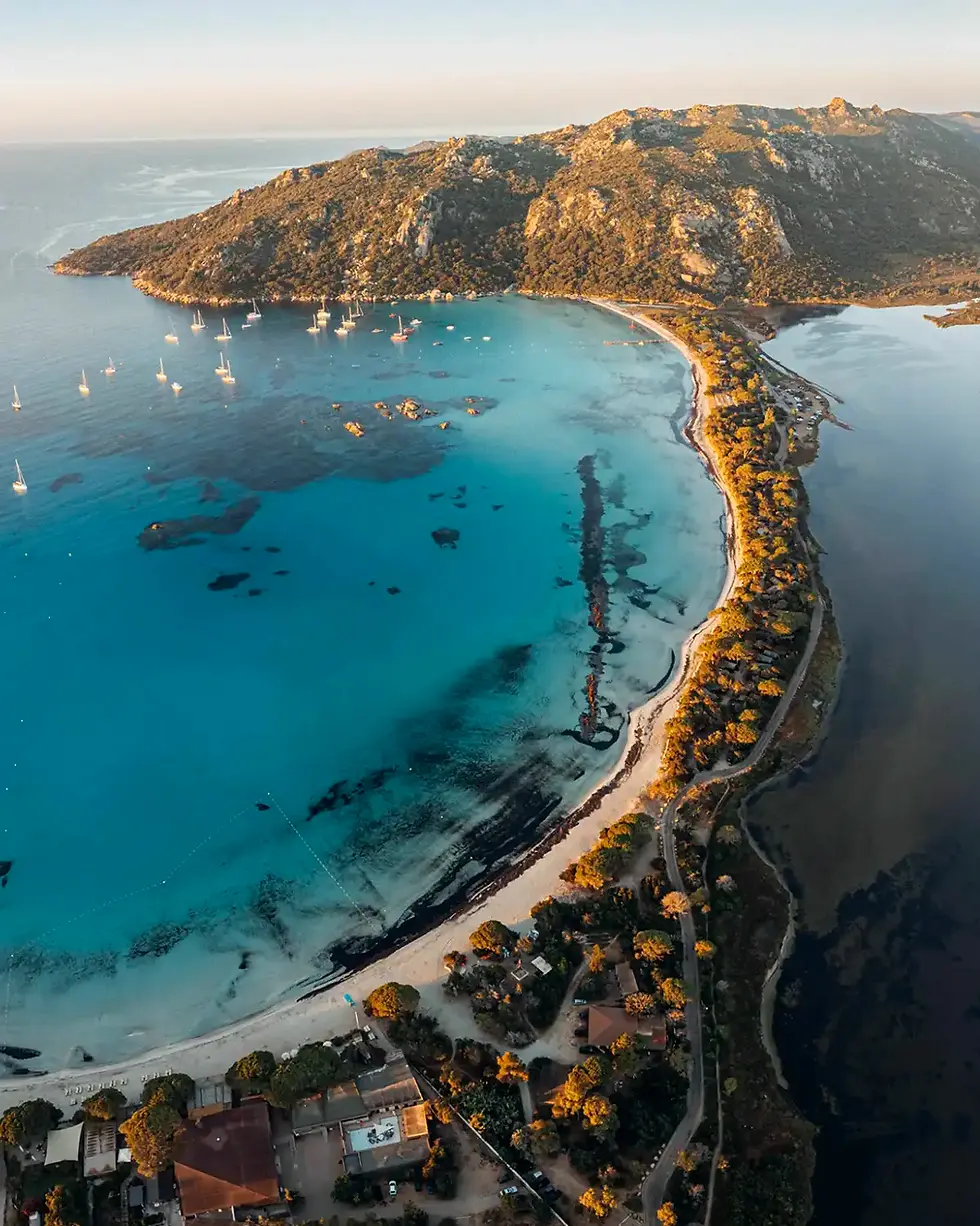
France’s only entry, and it’s a calm one. A lagoon-like bay near Porto-Vecchio, on Corsica’s southeastern coast. Pale sand. Shallow water that barely moves.
Porto-Vecchio itself is one of Corsica’s busier summer towns, an old citadel port turned yachting and nightlife hub. Santa Giulia sits a few kilometres south, in its own quiet bay. A narrow headland shields it from the open sea and keeps the water flat as glass.
7. Playa de Cofete, Fuerteventura, Spain

The wild card. No calm lagoon here. This is the raw Atlantic coastline, backed by the jagged Jandía mountains on Fuerteventura’s emptiest stretch. The beach runs 13 kilometres along the southwestern coast of the Jandía peninsula. Powerful waves and strong currents make it unsuitable for swimming.
The tiny village of Cofete sits behind the beach. It has around 20 properties and one small restaurant. Getting there means crossing the Jandía mountains on an unpaved track, which keeps the area cut off from the resort towns on the island’s other coast.
Looming over the village is Villa Winter, a mysterious two-storey house built by a reclusive German engineer in the 1940s. It has fed conspiracy theories about Nazi gold and secret submarine bases for eighty years. Almost nothing else is built here. That’s the entire point.
8. Praia da Falesia, Algarve, Portugal

Portugal’s entry is the most accessible beach on this list. Kilometres of ochre-red sandstone cliffs drop straight into turquoise water near Albufeira.
Albufeira is one of the Algarve’s busiest and most established resort towns, packed with bars, golf courses and decades of British package-holiday history. Praia da Falesia stretches east from there, along a wilder, undeveloped clifftop. A wooden staircase is the only way down to the sand. Easy to reach. Hard to forget.
9. Porto Timoni, Corfu, Greece

Greece’s third entry. Ranked No. 46 worldwide. A double-bay beach, split by a narrow headland, framed by green hills and turquoise water on both sides.
Corfu is the lushest of the Ionian Islands, full of olive groves and Venetian architecture. Its northwestern coast, around the village of Afionas, is where development thins out fast. Porto Timoni sits below the village. The only way in is a steep hiking trail or a boat from nearby Agios Stefanos. Two beaches, one hike. Efficient paradise.
10. La Pelosa, Sardinia, Italy

Italy’s second entry. The water near the village of Stintino is so shallow and clear that comparisons to the Caribbean are constant. A 16th-century Aragonese watchtower sits on a small rocky islet at the far end of the beach.
Stintino is a former fishing village on Sardinia’s northwestern tip, founded in 1885 by families relocated from the nearby island of Asinara. Asinara is now a national park, visible from the sand. La Pelosa is also one of the busiest beaches in all of Sardinia, drawing crowds of people a day at the height of summer. That popularity has forced Italy to cap visitor numbers and charge entry fees in peak season.
11. Keem Beach, Ireland

Ireland’s lone entry, and the country’s strongest possible showing. It’s a horseshoe-shaped strand on Achill Island, off County Mayo, tucked beneath the cliffs of Croaghaun on Ireland’s wild Atlantic coast.
Headlands shelter the bay on both sides, keeping the water calmer than on much of the surrounding coastline. That’s a rare thing in the North Atlantic. Achill is connected to the mainland by a bridge. Keem itself sits at the very end of the island’s only road, past the village of Dooagh, with nothing beyond it but cliff and ocean.


