


Britain's Most Brilliantly Bonkers Events

Updated: Jul 26
Somewhere in the British national character there is a deep, unshakeable conviction that the best way to spend a weekend is hurling a hard biscuit across a field, chasing a wheel of cheese down a near-vertical hill, or snorkelling through a peat bog in flippers.
The UK's calendar of eccentric events stretches back generations, surviving wars, recessions and the relentless march of the sensible. They are genuinely beloved, increasingly international in their audiences, and absolutely worth planning a trip around.
Rural Retreats, specialists in holiday cottages across Britain, have put together a selection of the country's most eccentric events for 2026. Here's what's on, and why it's worth the trip:
Great Knaresborough Bed Race — North Yorkshire, 13 June

The rules are straightforward: build a bed, decorate it to within an inch of its life, and have a team of six push it through the streets of Knaresborough while a seventh person rides on top. The course winds through the town before ending with a wheel-spinning plunge into the River Nidd, passenger included.
Teams compete in decoration categories as well as for outright speed, which means the field ranges from serious athletic outfits to elaborate themed constructions that have clearly prioritised spectacle over hydrodynamics. It has been running since 1966 and draws crowds from across Yorkshire every June. Loud, chaotic, and completely committed to its own logic.
Website: bedrace.co.uk
Dorset Knob Throwing — Cattistock, 19 July

The Dorset Knob is a hard, dry, fist-sized biscuit produced in small quantities by a single bakery in West Dorset. It has been made the same way for over a century.
The Dorset Knob Throwing Games, part of the Cattistock Countryside Show, take this very regional product and turn it into a competitive sport, with categories for distance throwing, knob and spoon races, and knob decorating.
There is also a knob eating competition, for those whose ambitions run in a different direction. The surrounding show is a full country fair with livestock, local produce and the kind of unhurried atmosphere that is increasingly hard to find.
If you've never been to a village show in rural Dorset, this is an excellent entry point, and the Jurassic Coast is a short drive away for the afternoon.
Website: cattistockvillage.co.uk
Cooper's Hill Cheese Rolling — Gloucestershire, May

Every spring bank holiday, a small Gloucestershire hillside briefly becomes the most chaotic place in England. A wheel of Double Gloucester, solid, heavy, capable of reaching 70mph on the descent, is sent hurtling down the near-vertical face of Cooper's Hill. Competitors launch themselves after it. The cheese invariably wins.
Most participants do not make it to the bottom upright; the St John Ambulance presence at the foot of the hill is well-staffed and experienced. The event has no formal organisation, no corporate sponsor, and no safety measures beyond a few hay bales. It was briefly banned. It came back.
People travel from Japan, the United States and Australia specifically to either compete or watch. The winner gets the cheese. That's the prize. The whole thing is completely unhinged and one of the great sporting spectacles on earth.
Website: cheese-rolling.co.uk
World Bog Snorkelling Championships — Mid Wales, 30 August

Since 1986, competitors have been travelling to Llanwrtyd Wells in mid-Wales to race through a 55-metre trench cut into a peat bog, armed with snorkels and flippers and explicitly prohibited from using conventional swimming strokes. You navigate by feel and instinct.
The water is cold and brown, with visibility approximately zero. The current world record stands at just over one minute and 18 seconds, which gives you some indication of what serious training for this event looks like.
There is also a Mountain Bike Bog Snorkelling variant, for those who find the standard format insufficiently challenging. Llanwrtyd Wells, which also hosts the Man versus Horse Marathon and the Real Ale Wobble cycling event, has quietly established itself as the eccentric sporting capital of Britain, and this is its crown jewel.
Between the Trees Festival — Wales, 27–30 August
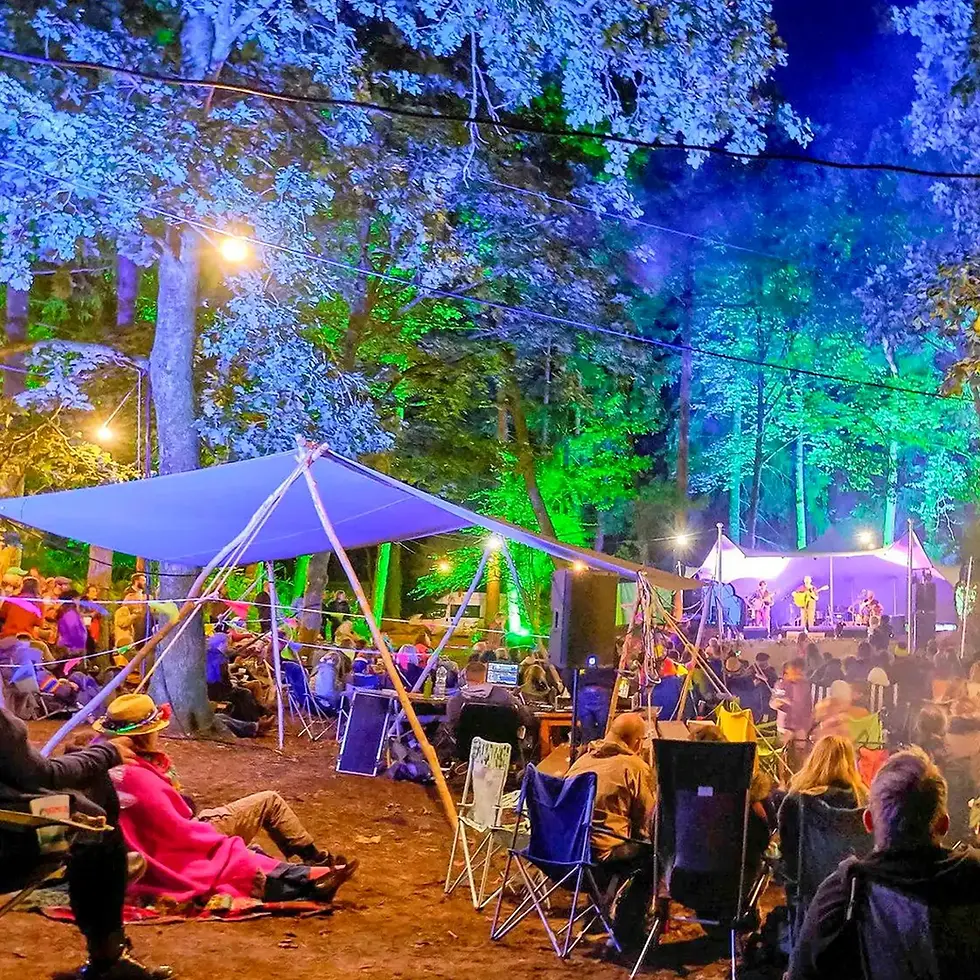
Not eccentric so much as quietly counter-cultural. This is a music, storytelling and nature-led festival set within ancient Welsh woodland, deliberately small, deliberately unhurried, and entirely free of the corporate infrastructure that defines most modern festival experiences.
There are forest stages rather than main stages, workshops in foraging, bushcraft and natural crafts, and long stretches of the programme that simply encourage you to be in the trees.
The lineup prioritises folk, acoustic and experimental music over headliners. It is the kind of festival that people who have grown tired of festivals tend to discover and immediately return to the following year.
Website: betweenthetrees.co.uk
All Things Fungi Festival — Sussex, 18–20 September

Fungi are having a cultural moment, and this Sussex festival arrived ahead of the curve. Across a dedicated weekend in early autumn, families and enthusiasts are invited into the woodland for guided foraging walks led by mycologists, creative workshops using natural dyes and materials, and hands-on sessions exploring the ecology of the forest floor.
The science here is genuinely fascinating: fungi underpin almost every woodland ecosystem on earth, and the experts leading these sessions are good at making that legible for all ages.
The South Downs setting provides some of the best woodland walking in the south of England, and the timing, peak mushroom season, is exactly right.
Website: allthingsfungi.co.uk
World Conker Championships — Northamptonshire, 11 October

Conkers, the game in which two players take turns striking each other's horse chestnut on a string until one shatters, is as British an autumn tradition as it gets. The World Championships, held annually in the village of Southwick, elevate this schoolyard pastime into a bracketed international competition with hundreds of entrants from across Europe and beyond.
Conkers are provided on the day to ensure fairness and prevent any pre-treatment of the nut, a practice known as "cheating" and regarded with extreme suspicion. The event raises significant money for charity each year and has been running since 1965. Take it as seriously as you like.
Website: worldconkerchampionships.com
Apple Fair, Brogdale Collections — Kent, 3–4 October

Brogdale Farm near Faversham is home to the National Fruit Collection, the largest collection of fruit varieties in the world, with over 2,000 apple cultivars, 500 pear varieties and hundreds of cherries, plums and nuts.
The annual Apple Fair opens the orchards to the public during peak harvest season, with tastings of dozens of varieties, guided tours, talks by pomologists, and family activities.
For anyone interested in food heritage, biodiversity or simply in understanding how much variety has been quietly maintained in a corner of Kent for decades, this is a remarkable afternoon. The Kentish Weald in October is also, it should be said, extremely beautiful.
Website: brogdalecollections.org
Cotswold Olimpick Games — Chipping Campden, May

Running since 1612 on Dover's Hill above Chipping Campden, the Cotswold Olimpick Games predate the modern Olympics by nearly three centuries. The programme includes various traditional country sports, but the centrepiece, the event everyone comes for, is the World Shin-Kicking Championships.
Competitors in white coats stuff their trousers with straw for padding, grip each other by the shoulders, and attempt to kick their opponent's shins until someone goes down. It is as much a test of pain threshold as of technique, and it is taken with absolute seriousness.
The evening ends with a torchlit procession down into Chipping Campden, one of the prettiest towns in the Cotswolds. The combination of Jacobean sporting heritage, mild violence and honey-stone architecture is not available anywhere else.
Webiste: olimpickgames.co.uk
World Pooh Sticks Championships — Oxfordshire, May

A.A. Milne invented the game on a bridge in Ashdown Forest, but it is on the Thames in Oxfordshire that it has become an international competition.
Competitors drop sticks from one side of a bridge and race to the other to see whose emerges first. The rules are exactly what you remember from childhood.
The event attracts entrants from across the world, including teams who have clearly thought about stick aerodynamics in some depth. It is held in a beautiful stretch of the Oxfordshire countryside and manages the difficult trick of being simultaneously a real competition and a very good joke that everyone is in on.
Webiste: poohsticks.uk
The British summer, it turns out, does not require sunshine. It requires a wheel of cheese, a peat bog, and the unshakeable conviction that any activity worth doing is worth turning into a championship. Rural Retreats has holiday cottages near all of the above — details at ruralretreats.co.uk.


