


Roadtrip: Nine Must-Stops between Barcelona and Malaga

Updated: Feb 22

Spain's Mediterranean coastline offers one of Europe's most rewarding driving experiences. The journey from Catalonia's cosmopolitan capital to the sun-drenched shores of Andalusia covers roughly 1,000 kilometres, weaving through Roman ruins,
Moorish fortresses, futuristic architecture, and whitewashed villages clinging to mountainsides. Allow at least a week to savour the flavours, history, and landscapes that have drawn travellers to these shores for millennia.
Here are nie stops that will transform your drive into an unforgettable journey through Spain's Mediterranean heartland.
Read more:
Tarragona
About 1 hour from Barcelona

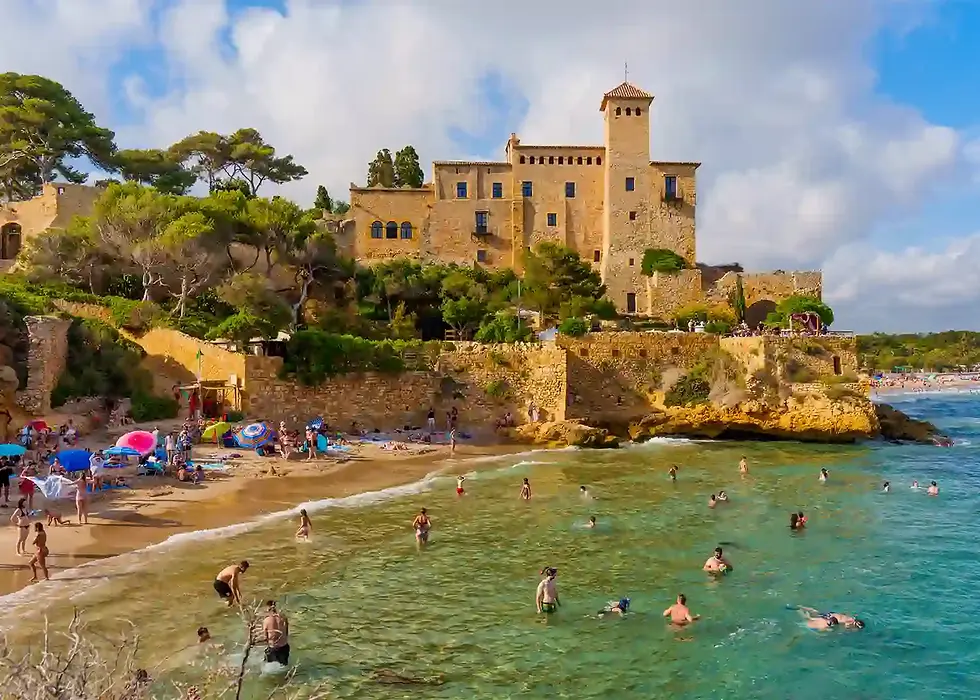
Your first stop delivers an unexpected punch of wow factor. Tarragona has Roman ruins that rival anything in Italy, but without the crowds or the prices. The amphitheatre alone is worth the detour – a 2,000-year-old arena built right on the seafront where you can sit on the ancient stone seats and watch the waves roll in.
What to do:
The Roman Amphitheatre is the star attraction. Here you sit where spectators once cheered gladiators. Time your visit for late afternoon when the light turns golden, and day-trippers have left. There's no café inside, so grab a drink beforehand and linger.
Beyond the amphitheatre, pick up the combined ticket that covers several sites. The Roman Circus still has underground tunnels you can walk through. The Passeig Arqueològic is a peaceful walk along the top of the ancient walls, offering great views over the city and the sea.
For lunch, skip the tourist restaurants near the cathedral and head to the Serrallo fishing quarter instead. This working harbour has restaurants serving whatever came off the boats that morning. Order the fideuà, like paella but with short noodles, or the arroz negro, a rice dish cooked in squid ink. Sit outside, watch the fishermen mend nets, and enjoy some of the freshest seafood of your trip.
The beach at Platja del Miracle sits right below the amphitheatre – perfect for a quick swim. For better sand, drive 10 minutes to Platja Llarga, a long golden beach backed by pine trees with several good beach bars.
The old town is compact and pleasant to wander through. The cathedral has a beautiful cloister where you can escape the heat. The Rambla Nova is the main boulevard for coffee and people-watching.
Insider tip: The Balcó del Mediterrani viewpoint at the end of the Rambla Nova is where locals come at sunset. There's an iron railing that everyone touches for good luck – you'll see it's worn smooth and shiny from all the hands!
2. Valencia
About 2.5 hours from Tarragona


Spain's third city deserves at least two nights. Valencia has reinvented itself spectacularly over the past couple of decades, adding jaw-dropping modern architecture to its beautiful old town. It's got great beaches, a brilliant food scene, and a relaxed vibe that makes it easy to love.
What to do:
The City of Arts and Sciences is genuinely stunning – even if you don't go inside anything, it's worth visiting to walk around and photograph the extraordinary buildings reflected in the surrounding pools. That said, do go inside at least one.
The Oceanogràfic is Europe's largest aquarium, and it's brilliantly done. The underwater tunnel through the shark tank is thrilling, the beluga whales are mesmerising, and the outdoor areas feel more like a marine park than a traditional aquarium. The dolphin show is included in the ticket. Allow 3-4 hours minimum.
The Hemisfèric planetarium shows films on a massive dome screen – great if you need a break from the heat - and the building, shaped like a giant eye, is architecturally spectacular. The Science Museum is very hands-on, perfect for families, with everything from dinosaur skeletons to interactive experiments.
In the old town, the Central Market is an absolute must. This gorgeous Art Nouveau building houses hundreds of stalls selling ham, cheese, olives, fresh juices, pastries, and produce as you've never seen before. Come hungry around 11 am and graze your way through. Several stalls have counters where you can eat standing up – try the Spanish ham carved fresh off the leg, or grab a box of fresh-cut fruit.
The Silk Exchange next door is a UNESCO World Heritage Site and one of the most beautiful Gothic buildings in Europe. Entry is cheap, and it takes 20 minutes – definitely worth it for the incredible twisted stone columns in the main hall.
Rent bikes and cycle through the Turia Gardens. This 9-kilometre park runs through the city in an old riverbed that was diverted after a catastrophic flood in 1957. It's flat, car-free, and connects many of the main sights. Bike rental stands are everywhere.
Valencia's beaches are clean and well-maintained. Malvarrosa is the main city beach with plenty of facilities and restaurants. La Patacona just beyond is a bit quieter. For beach paella, the strip of restaurants along the Paseo Neptuno does it right – expect to wait 20 to 30 minutes while they cook it fresh in the pan.
The hip Ruzafa neighbourhood is where locals go for evening drinks. It's full of vintage shops, creative bars, and excellent restaurants.
Insider tip: Tuesday is a great day to visit because many museums are free.
3. Alicante
About 2 hours from Valencia

Alicante is wonderfully unpretentious – a proper Spanish city that happens to have great beaches, lively nightlife, and a spectacular castle looming over everything. It's a good place to slow down for a day or two.
What to do:
Santa Bárbara Castle dominates the city from its rocky perch. It's one of Spain's largest medieval fortresses, and exploring it feels like an adventure. You can take a lift that tunnels straight through the rock from Postiguet beach – the ride itself is fun, emerging suddenly onto the castle ramparts with views everywhere.
Once up top, wander freely through the different levels. There are old dungeons, exhibition rooms about the castle's history, cannons pointing out to sea, and a café with a terrace that might have the best view in town. The highest point offers 360-degree panoramas. Allow 1-2 hours.
Alternatively, walk up through the Santa Cruz neighbourhood, the old fishermen's quarter below the castle. It's a maze of narrow lanes, whitewashed houses draped in flowers, and unexpected little squares. It's steep but pretty, and you can stop for a drink along the way. The neighbourhood has transformed in recent years, with new cafés and boutiques, but it has kept its character.
The Explanada de España promenade is the social heart of the city, a wide boulevard paved with millions of marble tiles creating a wavy pattern. It's lined with palm trees, outdoor cafés, and artists selling their work. This is where everyone comes for the evening paseo (stroll).
For beaches, Postiguet is right in the centre – convenient but can get busy. Playa de San Juan is the local favourite: nearly 3 kilometres of golden sand with beach bars, volleyball nets, and water sports rentals. Take the tram from the centre (20 minutes), and you're there. Several chiringuitos serve decent food right on the sand.
A brilliant day trip is Tabarca Island, a tiny car-free island about an hour by boat from the harbour. The water is obvious, making it perfect for snorkelling. A few restaurants are serving fresh fish – the caldero, a fish stew with rice, is the local speciality. The island gets busy in summer.
The old Alicante town is excellent for tapas-hopping. Calle Mayor and the streets around Plaza del Ayuntamiento have lots of options. Order a small beer, and you'll often get a small tapa included. El Buen Comer and Cerveceria Sento are reliable choices.
The MACA (Contemporary Art Museum) has works by Picasso, Dalí, and Miró – small but worth a quick visit. The Archaeological Museum (MARQ) is worth a visit if you're interested in the region's history.
Insider tip: For the best sunset, take the lift up to the castle around 7 pm in summer. Let the sun go down over the city, then walk down through Santa Cruz as the neighbourhood comes alive for evening drinks.
4. Murcia
About 1 hour from Alicante

Most tourists skip Murcia entirely, which is precisely why you should stop. This elegant university city is authentically Spanish, with beautiful architecture, brilliant food, and far fewer visitors than you'll find on the coast. It feels like discovering a secret.
What to do:
The cathedral is the obvious starting point. The Baroque facade is incredibly ornate – one of the finest in Spain – and the bell tower, 93 metres high, offers panoramic views, second only to Seville's Giralda. Inside, look for the Chapel of the Vélez with its extraordinarily intricate carved stonework.
But the real surprise is the Real Casino, hidden behind an unremarkable door on the main shopping street. This 19th-century gentlemen's club has been restored to its original splendour, and the interior is genuinely jaw-dropping. There's a Moorish-style patio with a retractable glass roof, a ballroom covered in gold leaf, a library with floor-to-ceiling books, and a ladies' powder room that looks like it belongs in a palace. Entry is about €5 and worth every cent. Allow 30-45 minutes to wander around and take photos.
The Salzillo Museum houses wooden sculptures created for Easter processions. Even if religious art isn't your thing, these are extraordinary – incredibly lifelike figures showing intense emotion, carried through the streets during Semana Santa. Murcia's Holy Week celebrations are among the most spectacular in Spain.
For food, Murcia is a destination in itself. The region is called "the garden of Spain" for its fertile farmland, and you'll taste the difference in the produce. The Verónicas Market is great for browsing – look for fresh fruits, excellent charcuterie, and local cheeses.
Tapas here are generous and cheap. Plaza de las Flores and Plaza Santo Domingo are filled with terrace restaurants perfect for a long lunch. Try the local specialities: zarangollo, scrambled eggs with courgette, marinera, a Murcia invention – a round of Russian salad on a breadstick topped with an anchovy, and michirones, spicy broad beans. Wash it down with a glass of monastrell, the local red wine.
The old town is compact and pleasant to wander through. The narrow streets around the cathedral have good shopping, from traditional ceramics to Spanish fashion brands. Trapería and Platería are the main pedestrianised streets.
If you have extra time, Cartagena is just 30 minutes away and makes an excellent half-day trip. The Roman theatre there is stunning – only discovered in 1988 and now brilliantly presented with a modern museum. The port area has good restaurants, and you can take a boat tour around the naval base.
5. Almeria
About 2.5 hours from Murcia

The drive to Almeria is an experience in itself – you'll pass through Europe's only proper desert, a landscape so stark and dramatic that Hollywood used it for Spaghetti Westerns. The destination rewards you with an underrated city, a massive fortress, and some of Spain's most pristine beaches.
What to do:
The Alcazaba is the main attraction – a vast Moorish fortress built over a thousand years ago. It's the second largest in Spain after Granada's Alhambra, but with a fraction of the visitors. You can often wander almost alone through the gardens, fountains, and walls. The views over the city and sea are fantastic, and there's a genuine atmosphere here – you feel the history without fighting through crowds. Allow 1.5-2 hours.
Below the fortress, the old town has a surprisingly good tapas scene. The streets around Calle de las Tiendas and Plaza de la Constitución are filled with bars.
The Cabo de Gata Natural Park, about 30 minutes from the city, is the absolute highlight of this stop. This protected coastline has some of Spain's most beautiful and unspoilt beaches – no high-rise hotels, no waterparks, just dramatic volcanic cliffs, crystal-clear water, and golden sand.
Playa de los Muertos is consistently ranked among Spain's best beaches. The name means "beach of the dead", shipwrecks, not anything sinister, a crescent of white pebbles and turquoise water backed by dramatic cliffs. The catch: it's a 20-minute walk down a steep path, so bring water and good shoes. There are no facilities, so pack everything you need.
For easier access, the beaches around San José are excellent, with restaurants and parking. Las Genoveses is a beautiful bay with fine sand. Mónsul has dramatic rock formations and appeared in Indiana Jones. All are great for snorkelling – the water visibility is exceptional.
Rent kayaks in San José to explore sea caves and hidden coves along the coast. Several companies offer guided trips if you prefer. The snorkelling is some of the best in mainland Spain – look for octopus, colourful fish, and posidonia seagrass meadows.
For film buffs, Mini Hollywood is a genuine Spaghetti Western film set about 30 minutes north. It's undeniably touristy – there are can-can shows and staged gunfights – but also genuinely fun, especially with kids. The desert landscape around it is surreal.
6. Granada
About 2 hours from Almería


This is the showstopper of the trip. Granada's Alhambra is breathtaking, but the city around it is equally captivating: atmospheric neighbourhoods, fantastic tapas, flamenco in cave bars, and the Sierra Nevada mountains as a backdrop.
What to do:
The Alhambra needs careful planning. Tickets sell out days or weeks in advance. Book online as soon as you know your dates on the official website. Your ticket will have a specific time slot for the Nasrid Palaces – miss it, and you can't get in.
That said, the Alhambra is genuinely worth the effort. The Nasrid Palaces are extraordinary – intricate geometric patterns carved into every surface, peaceful courtyards with fountains, and the famous Court of the Lions with its ring of marble lions. The level of detail is astonishing, and photos don't do it justice.
The Generalife gardens are the summer palace, with beautiful terraces, water features, and rose gardens. The Alcazaba fortress is the oldest part, with towers you can climb for panoramic views. Budget at least 3 hours for the whole complex, longer if you want to linger. There's a café inside, but consider bringing snacks.
Beyond the Alhambra, Granada's neighbourhoods are wonderful places to explore. The Albaicín is the old Moorish quarter with narrow lanes, whitewashed houses, hidden carmenes, walled gardens, and tiny squares with orange trees. Get deliberately lost here – that's the point. Stop for mint tea at one of the tea houses in Calle Calderería Nueva, a street lined with Moroccan-style shops selling lamps, textiles, and leather goods.
The Mirador de San Nicolás viewpoint offers the classic postcard shot: the Alhambra glowing against the Sierra Nevada mountains. Come at sunset, and you'll share the space with street musicians, couples, and tourists from around the world. It's touristy but genuinely magical.
The Sacromonte neighbourhood, built into the hillside above the Albaicín, is famous for its cave houses and flamenco. Watching authentic flamenco in a small whitewashed cave is an experience you won't forget – the passion and intensity in that intimate setting is powerful. Several venues offer shows. Ask at your hotel for recommendations or book online. Some include dinner, but the show-only options are often better (and cheaper).
The cathedral and Royal Chapel are impressive if you have time – Queen Isabella I and King Ferdinand II are buried there. The Cartuja Monastery on the outskirts has an extraordinarily ornate sacristy that's considered one of the finest examples of Spanish Baroque.
Insider tip: The Nasrid Palaces and Charles V Palace in The Alhambra do night visits on certain evenings. It's an entirely different experience and much less crowded—book separately from day tickets.
7. Frigiliana
About 1.5 hours from Granada

After the intensity of Granada, Frigiliana is the perfect palate cleanser. This tiny hilltop village has been voted the prettiest in Andalusia, and the moment you arrive, you'll see why. It's impossibly photogenic – a maze of steep cobblestone streets, brilliant white houses draped in bougainvillaea, and stunning views at every turn.
What to do:
The main activity here is simply wandering. There are no museums, no must-see monuments – the village itself is the attraction. Get deliberately lost in the tangle of narrow lanes, climb the steep streets to find hidden viewpoints, and stop frequently for cold drinks on sunny terraces.
The Barrio Alto, the upper quarter, is the most atmospheric part, with the oldest houses and best views. Look for the ceramic plaques on the walls that tell the story of the 1569 Moorish rebellion – it's like an open-air history lesson. The higher you climb, the better the views over the mountains and down to the coast.
There are plenty of little shops selling ceramics, leather goods, and local crafts. The quality is generally good, and prices are reasonable. Look for pieces by local artisans rather than mass-produced souvenirs.
One local product you have to try is miel de caña, sugarcane honey. Frigiliana has the last traditional sugarcane factory in Europe, producing this dark, smoky-sweet syrup. You'll see bottles in every shop. It's delicious drizzled over fried aubergine, goat's cheese, or even vanilla ice cream. Buy a bottle to take home.
For food, the restaurants here are solid rather than spectacular, but the setting makes up for it.
If you want some exercise, a trail leads up to the ruined Castillo de Lizar above the village. It's a moderately steep 30-minute hike, and the castle itself is just ruins, but the views are spectacular – you can see the Mediterranean, the mountains, and the whole valley laid out below.
The Thursday market brings local farmers to Plaza de las Tres Culturas, where they sell fresh produce, olives, cheese, and cured meats. If you're self-catering or want to picnic, it's a good place to stock up.
Insider tip: Visit late afternoon, after the tour buses have left, and stay for sunset. The light turns golden, the white houses glow pink, and the village empties to something close to its usual quiet self. Then drive 15 minutes down to Nerja for dinner by the sea.
8. Nerja
About 15 minutes from Frigiliana

Nerja combines beautiful beaches and a charming old town that hasn't been completely overrun by tourism. It's busy but not overwhelmed, with enough going on to keep you entertained for a couple of days.
What to do:
The Caves of Nerja are the headline attraction. Discovered by local teenagers while chasing bats in 1959, these enormous caverns contain spectacular stalactites and stalagmites, including a 32-metre-tall column. The caves maintain a constant 19°C, making them a perfect escape from summer heat or winter chill.
An audio guide takes you through the accessible galleries and lasts about 45 minutes. The chambers are vast, with names like the Hall of the Cataclysm and the Hall of Ghosts. One chamber is so large that it holds concerts – the acoustics are incredible. The caves also contain ancient paintings, potentially 42,000 years old, though they're protected from view. A VR experience at the visitor centre shows what the closed sections look like.
Book tickets online for a small discount, and try to arrive early – the caves get busy mid-morning when tour buses arrive. There's a good restaurant at the site with views toward the sea, plus a botanical garden if you want to linger.
The town of Nerja is centred on the Balcón de Europa, a palm-lined promenade on a cliff with sweeping coastal views. It's a lovely spot for morning coffee or evening drinks, watching the sun set over the Mediterranean. The beaches on either side are accessible by steps from the balcony.
Burriana beach is the largest and most popular, with good facilities, restaurants on the sand, and water sports rentals. The chiringuitos serve decent food with your feet practically in the water. Calahonda beach, accessible through a tunnel from the old town, is smaller and more atmospheric.
Take a kayak trip along the dramatic cliffs of the Maro-Cerro Gordo coastline. Several companies offer guided tours (2-3 hours) that take you past sea caves, waterfalls, and hidden coves inaccessible by land. The water is beautifully clear, and you'll often see fish below your kayak. Some trips include snorkelling stops.
The old town is pleasant for wandering, with narrow streets, whitewashed houses, and plenty of restaurants and bars. Calle Almirante Ferrándiz and Calle Pintada are the main streets for shops and eating. The quality of restaurants is generally good – this is a popular area for British expats, so there's variety and competition.
Combine Nerja with nearby Maro, a tiny village close to the caves with a beautiful beach (Playa de Maro), considered one of the best in Andalusia. It's small and gets busy in summer, but the water is crystal clear, and there's a decent restaurant.
9. Malaga
About 1 hour from Nerja

Your journey ends in Malaga, and what a finish! The Costa del Sol's capital has transformed dramatically over the past couple of decades, shedding its reputation as just an airport hub to become one of Spain's most vibrant, cultural cities. It's the birthplace of Picasso, home to excellent museums, and blessed with great beaches, food, and nightlife.
What to do:
Start high and work down. The Gibralfaro Castle sits at the top of the hill, with the best panoramic views over the city, port, and bullring far below. You can drive or take a bus, but the walk up through pine trees is pleasant in cooler weather. The castle is well-preserved, with walls you can walk along and old guardhouses to explore.
Below Gibralfaro, connected by the same ticket, is the Alcazaba – a beautiful Moorish fortress with terraced gardens, fountains, and intimate courtyards. It's smaller and more refined than the Alhambra, with similarly intricate tile work and incredible views through horseshoe arches. The combination of the two takes 2-3 hours and is highly recommended.
At the foot of the Alcazaba, the Roman Theatre is free to visit – it was only discovered in the 1950s and is surprisingly intact, with summer performances still held here.
Malaga has embraced its cultural side with enthusiasm. The Picasso Museum, in the artist's ancestral home, has over 200 works spanning his career. The Casa Nata, the master's birth house, is nearby and also a museum. In a striking, colourful cube by the port, The Centre Pompidou Málaga brings Paris's famous collection of modern art to Spain. The Carmen Thyssen Museum focuses on 19th-century Spanish painting in a beautifully converted palace.
The Automobile Museum is surprisingly entertaining with vintage cars displayed alongside fashion from each decade. The Russian Museum has an outpost here with rotating exhibitions.
The pedestrianised old town is excellent for wandering. The main streets around Calle Larios are full of shops and cafés, but duck into the side streets for more character. Plaza de la Merced, where Picasso was baptised, is a pleasant square for a drink. The cathedral, nicknamed "La Manquita", the one-armed lady, because its second tower was never finished, is worth a look inside for its ornate choir stalls.
The Atarazanas Market is excellent for breakfast or lunch – a beautiful 19th-century iron-and-glass building with stalls selling fresh fish, produce, and cured meats. Several bars inside serve food; grab a stool and order whatever looks good.
For beaches, La Malagueta is closest to the centre – a long sweep of sand with good facilities. The chiringuitos serve excellent fried fish, especially the espetos, sardines grilled on bamboo skewers over an open fire, a Malaga speciality. Further east, Pedregalejo and El Palo have a more local vibe and some of the best beachfront restaurants.
The port area, Muelle Uno, has been redeveloped with restaurants, shops, and a pleasant promenade. It's busy but enjoyable, especially for sunset drinks.
Malaga's nightlife is some of the best in Andalusia. The old town is packed with bars, from traditional taverns to trendy cocktail spots. For rooftop drinks with views, you can read more in our Seven rooftop bars in Malaga article.
End your trip the traditional way at Antigua Casa de Guardia, a bar that's been serving sweet Malaga wine from barrels since 1840. Stand at the wooden bar where everyone from Picasso to Hemingway claims to have drunk, order a glass of dry Pajarete or sweet Pedro Ximénez, and toast an unforgettable journey.
Insider tip: The Picasso Museum is free on Sundays after 5 pm. Also, the open-top tour bus is actually good here, with commentary explaining the city's history and culture while you get your bearings.


